
A measured pre-departure guide covering tyres, fluids, luggage, route choice and the discipline that keeps a special car enjoyable.
Start with condition, not cosmetics
A clean car is pleasant, but mechanical condition determines whether a long journey remains enjoyable. Review scheduled maintenance, warning messages, fluid levels and any recurring issue before departure. If service is due near the trip, arrange it with enough time to identify a problem rather than collecting the car the night before.
Inspect lights, wipers, glass and number plates. Confirm that the tool kit, locking-wheel key, inflator or spare system and towing eye are present. Modern performance cars can require model-specific recovery procedures; store the handbook offline and know the manufacturer’s roadside-assistance process.
Give tyres serious attention
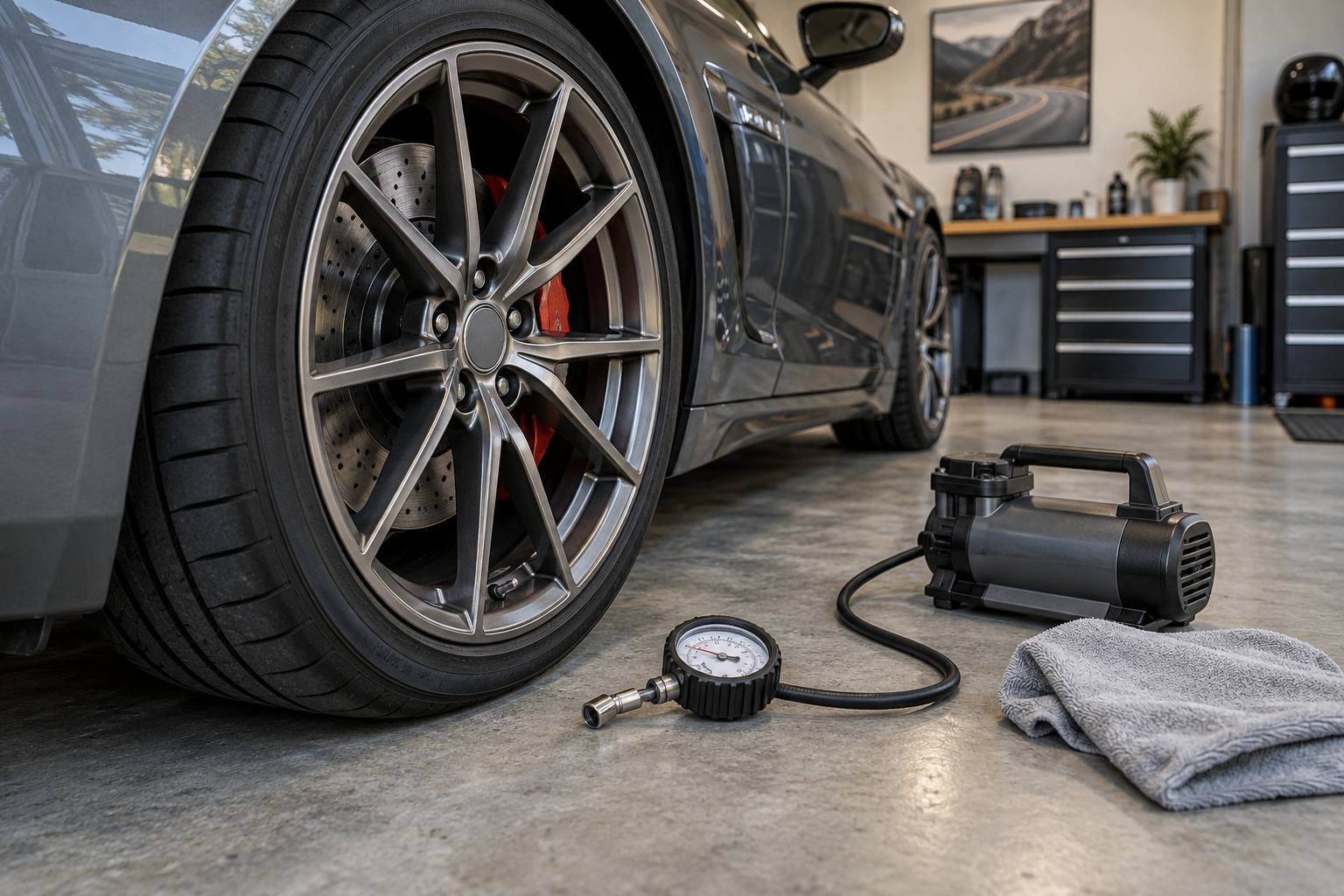
Tyres connect every dynamic system to the road. Check tread, sidewalls and age, then set pressure when cold to the manufacturer’s recommendation for the expected load. NHTSA advises using the vehicle maker’s specified pressure rather than the maximum shown on the tyre sidewall. Recheck after a major temperature change, not immediately after hard driving.
A tyre optimized for warm, dry performance may be unsuitable for cold or wet conditions. Match the tyre to season and destination, and understand whether the car has run-flat capability or only sealant. On unusual sizes, replacement stock may be limited outside major cities; roadside cover should reflect that reality.
Pack for balance and access
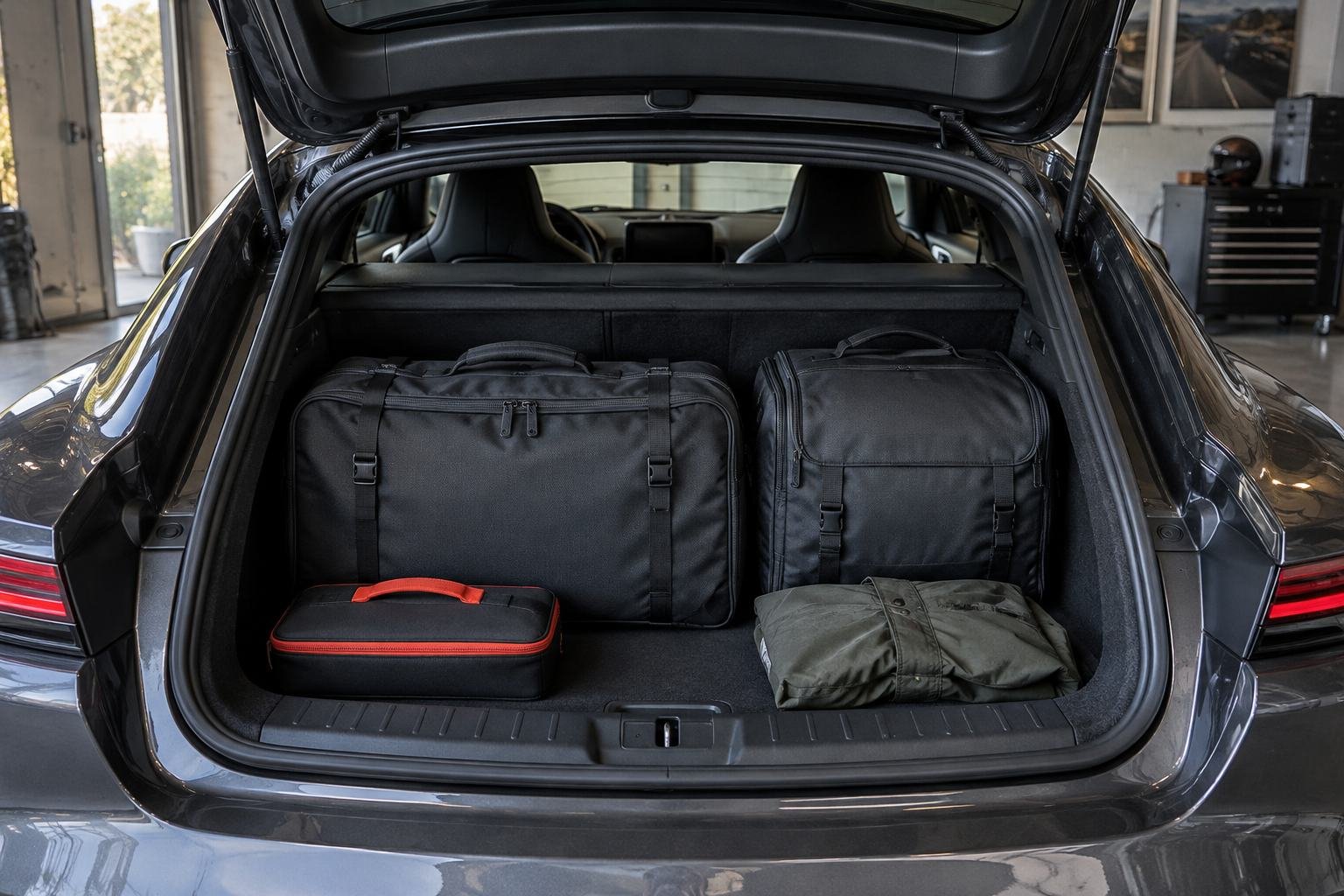
Low roofs, shallow boots and soft luggage reward rehearsal. Pack the car several days early, securing heavy items so they cannot move under braking. Keep emergency equipment, documents, water and a warm layer accessible. Never stack luggage where it blocks rear visibility or interferes with a convertible mechanism.
Reduce objects in the cabin. A camera or bottle becomes hazardous in a sudden stop. If the car offers several suspension or load settings, follow the handbook rather than guessing. Extra mass changes braking, ride and tyre pressures even when the engine makes it feel effortless.
Design the route for the car and driver
A celebrated mountain road may be narrow, rough or crowded. Check seasonal closures, fuel availability, parking geometry and low-emission zones. Build an alternate route for bad weather. The best road is one that suits the car without requiring aggressive speed or exhausting concentration.
Break long motorway stretches with a quieter road or worthwhile stop, but avoid turning every day into a maximum-distance challenge. Performance seats and firm suspension can become tiring; schedule pauses and share driving where insurance and competence permit.
Manage fuel and heat thoughtfully
Know the required fuel grade and do not assume it will be available in a remote area. Refuel before the gauge forces a poor choice. After demanding driving, allow the car to cool through normal gentle motion rather than stopping immediately after repeated heavy braking. Track use belongs on a circuit, not a public road.
Oil temperature, coolant warnings and brake feel deserve attention. If the car behaves differently, slow down and investigate safely. A road trip is not the moment to prove that a warning can be ignored.
Protect the experience
Choose secure, realistically sized parking and tell hotels the vehicle dimensions if access is uncertain. Keep valuables out of sight and keys away from exterior doors where possible. Photograph existing wheel and body condition before a valet handover, without making the interaction adversarial.
Preparation creates freedom. When tyres, service, luggage and route are settled, the car can do what it was designed to do: cover distance with character. The most memorable arrival is one made calmly, with the machine and its occupants ready for the next day.
Run a calm departure rehearsal
Take a local drive with the car fully packed several days before leaving. Listen for luggage movement, test phone charging and navigation, confirm that mirrors remain clear and check whether the driving position still feels comfortable after an hour. This rehearsal is the right moment to discover that a cable is missing, a bag blocks access to the toolkit or a passenger needs more space.
Prepare a compact route folder with registration, insurance, assistance details, hotel parking notes and any border or road-charge requirements. Keep sensitive documents secure rather than visible in the car. A paper summary can help when a phone has no signal, but it should contain only the information needed for the journey.
Prepare for borders, cities and restricted roads
A long route may cross toll systems, low-emission zones, vignette requirements or city-access controls. Consult official transport and government sources for each jurisdiction close to departure. Rules, enforcement and registration processes change, and a hotel’s informal assurance may not prevent a penalty.
Check whether insurance, breakdown support and recovery extend across every border and road type. Save policy numbers and the approved contact process. If the car has very low clearance or unusual towing points, mention this when requesting assistance; an unsuitable recovery method can create additional damage.
Plan fuel stops before remote or mountainous sections. Opening hours and required octane should be verified through current provider information. Carrying unauthorized fuel containers creates risk and may breach rules, so solve availability through route design rather than improvisation.
Drive for mechanical sympathy
Warm the car through gentle driving and allow fluids, tyres and brakes to reach normal operating condition before asking for performance. Manufacturer guidance governs the specific vehicle. On a descent, use an appropriate gear and maintain space rather than repeatedly relying on heavy braking. If feel, smell or pedal travel changes, stop safely and investigate.
Public roads are shared environments. Sight lines, surface quality, cyclists, animals and oncoming traffic make a technically exciting bend unsuitable for exploiting the car’s limit. Choose a legal circuit for high-speed exploration and treat the road journey as an exercise in smoothness, observation and restraint.
After a demanding or wet day, inspect tyres and bodywork in good light. Remove trapped debris only when it is safe, look for damage and note any new vibration. Early attention can prevent a small issue from shaping the remainder of the trip.
Keep the return leg in the plan
Drivers often plan the outward route carefully and treat the return as a single push. Reserve enough time, an overnight stop if needed and a recovery day before normal obligations. Fatigue does not become less important because the destination portion has ended.
When home, unpack emergency equipment, clean the cabin and record tyre pressures, mileage and any concern for follow-up. The journey is complete when the car is ready for ordinary use again, not merely when it reaches the garage.
Decide what success looks like
Set a purpose that is independent of speed: a sequence of landscapes, a meeting with friends, a design event or simply several good driving days. This makes it easier to abandon a celebrated road when weather, traffic or fatigue makes it unsuitable. The journey still succeeds because its value was never tied to one demanding section.
Record the route and mechanical notes without publishing sensitive locations for the car or accommodation. On return, retain what would improve the next trip and discard the rest. Preparation should become lighter with experience, not expand into a ritual that delays using the car.
Sources and further reading
Official and authoritative material used to support this guide. Access dates reflect editorial research.
- Tires, National Highway Traffic Safety Administration. Accessed October 12, 2026.