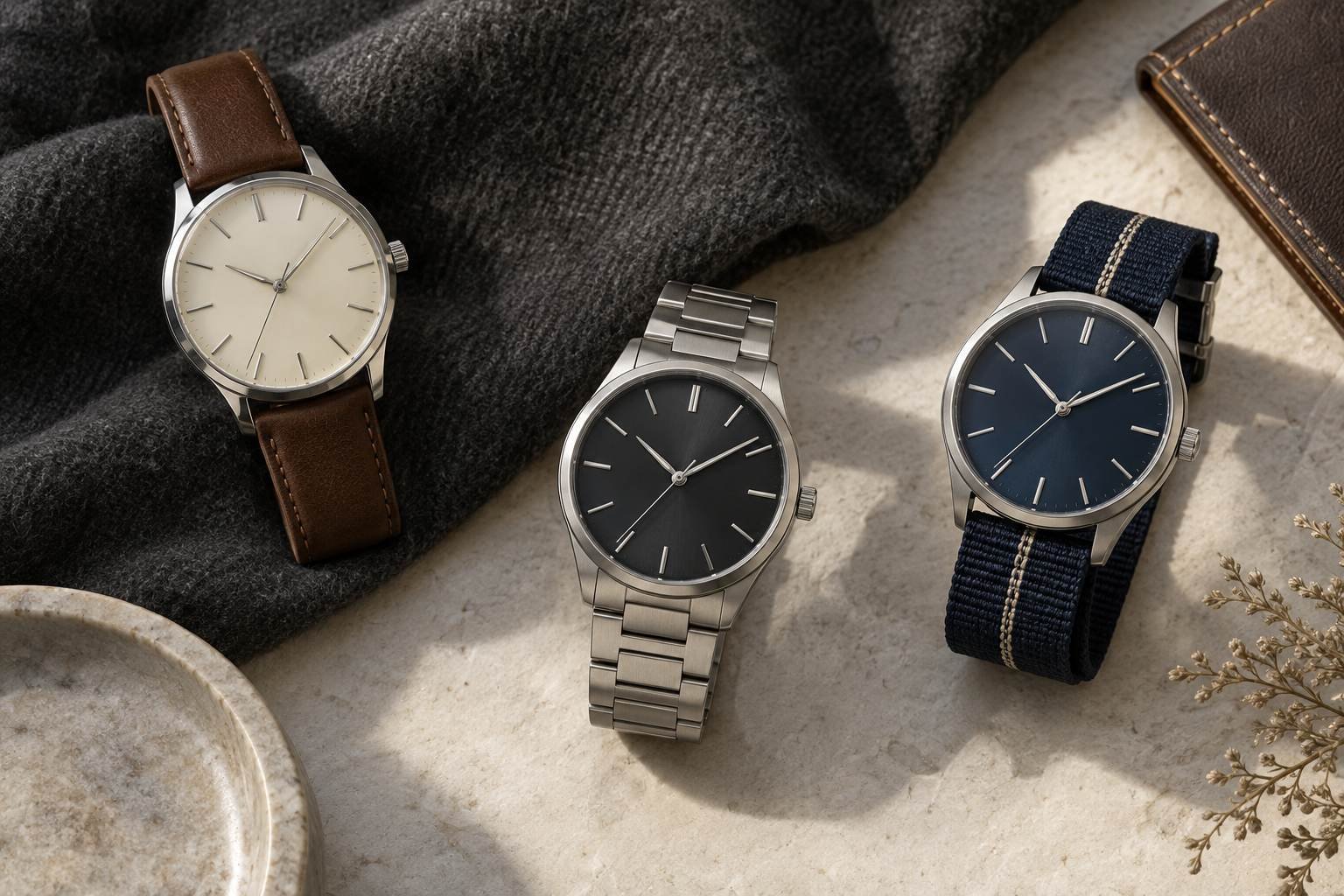
A collecting framework based on use, proportion, serviceability and personal interest rather than constant acquisition.
Collect around use
Begin with the situations in which a watch will be worn: ordinary work, water, travel, formal events or weekends. One versatile watch may cover most of them. Categories are prompts, not obligations; no collection requires a diver, chronograph and dress watch simply because enthusiasts use those labels.
Write a short brief for the next piece and wait. Case diameter, thickness, lug shape, bracelet adjustment and weight determine comfort more than a photograph. Try the watch in natural light and move the wrist through daily positions. A beautiful object that stays in a box is an expensive design mistake.
Understand the movement without worshipping it
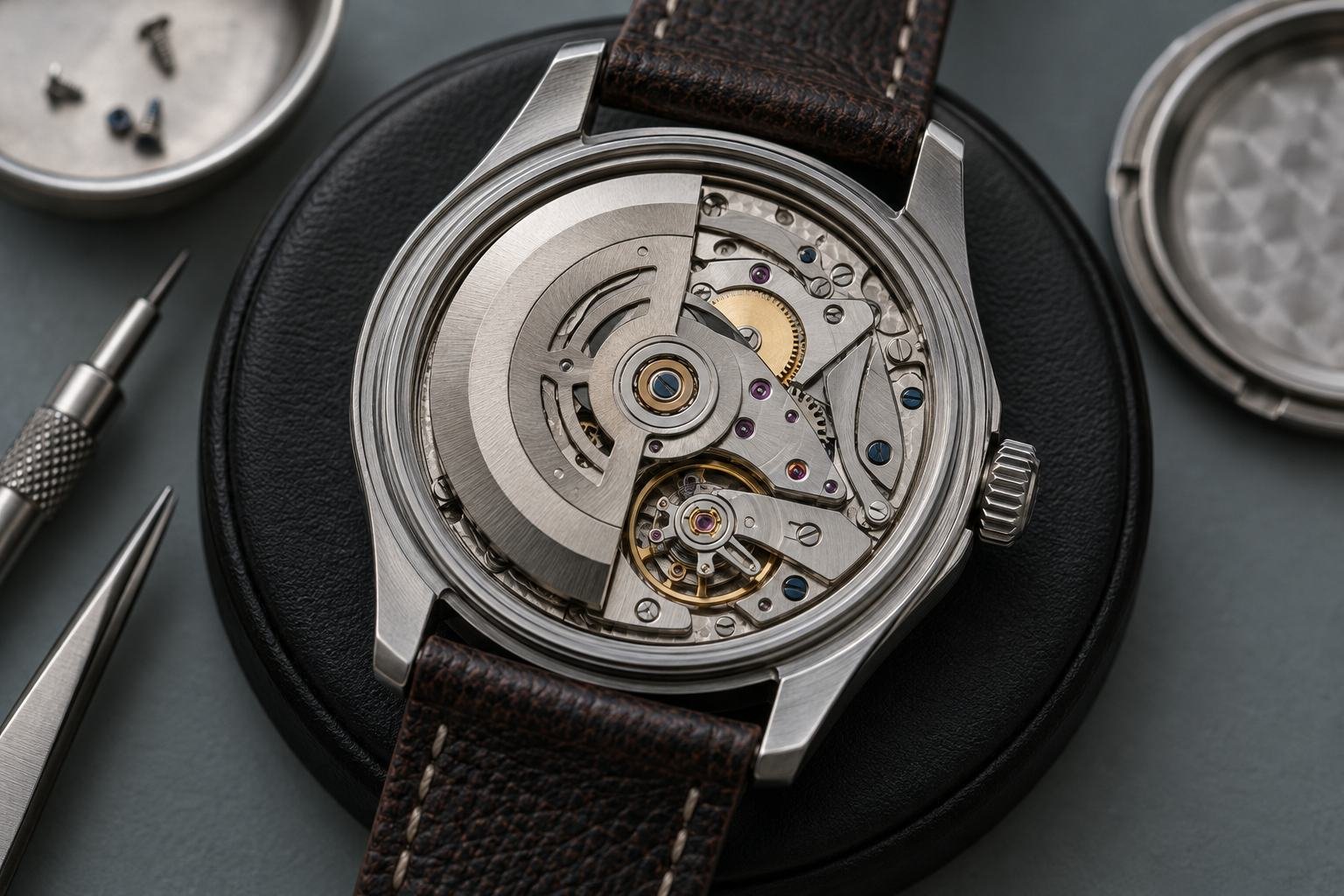
A mechanical movement can be valued for engineering, finishing, history or the ritual of winding. In-house manufacture does not automatically mean better reliability or service access, and a widely used movement may be an excellent long-term choice. Ask what the design contributes and how it can be maintained.
Accuracy claims should be specific. COSC independently tests qualifying Swiss movements against defined chronometer criteria; a chronometer label is meaningful when it refers to that certification. Other makers use different internal or external standards. Compare published conditions rather than assuming every accuracy statement is equivalent.
Use proportion as the guide
Measurements interact. A broad bezel can make a watch appear smaller; long lugs can make a modest diameter wear large; a thick case may catch a cuff. Dial contrast and hand length affect legibility. There is no universal size for a particular wrist.
Photographs taken with wide phone lenses distort proportion. Handle the piece, inspect it in a mirror from a normal distance and compare it with a watch already known to fit. Bracelet taper and clasp length can change the entire feel.
Budget for ownership
The purchase price is only the start. Mechanical watches require periodic service, and complications can add cost and time. Water resistance should be tested according to manufacturer guidance, especially before swimming. Polishing can alter case geometry, so discuss the scope of any refinishing.
Keep receipts, service records, spare links and replaced components. Insurance needs depend on value and circumstance; obtain specialist advice rather than assuming a household policy covers every loss.
Buy provenance, condition and trust
For new pieces, understand the warranty and whether the seller is authorized. For pre-owned watches, prioritize seller reputation, authenticity, condition and service history. Boxes and papers support provenance but cannot replace examination of the watch itself.
Vintage pieces require particular care because replacement parts, moisture resistance and prior refinishing may be uncertain. Independent inspection can be worthwhile. Walk away when pressure, incomplete information or an implausible story makes the transaction uncomfortable.
Allow the collection to stay small
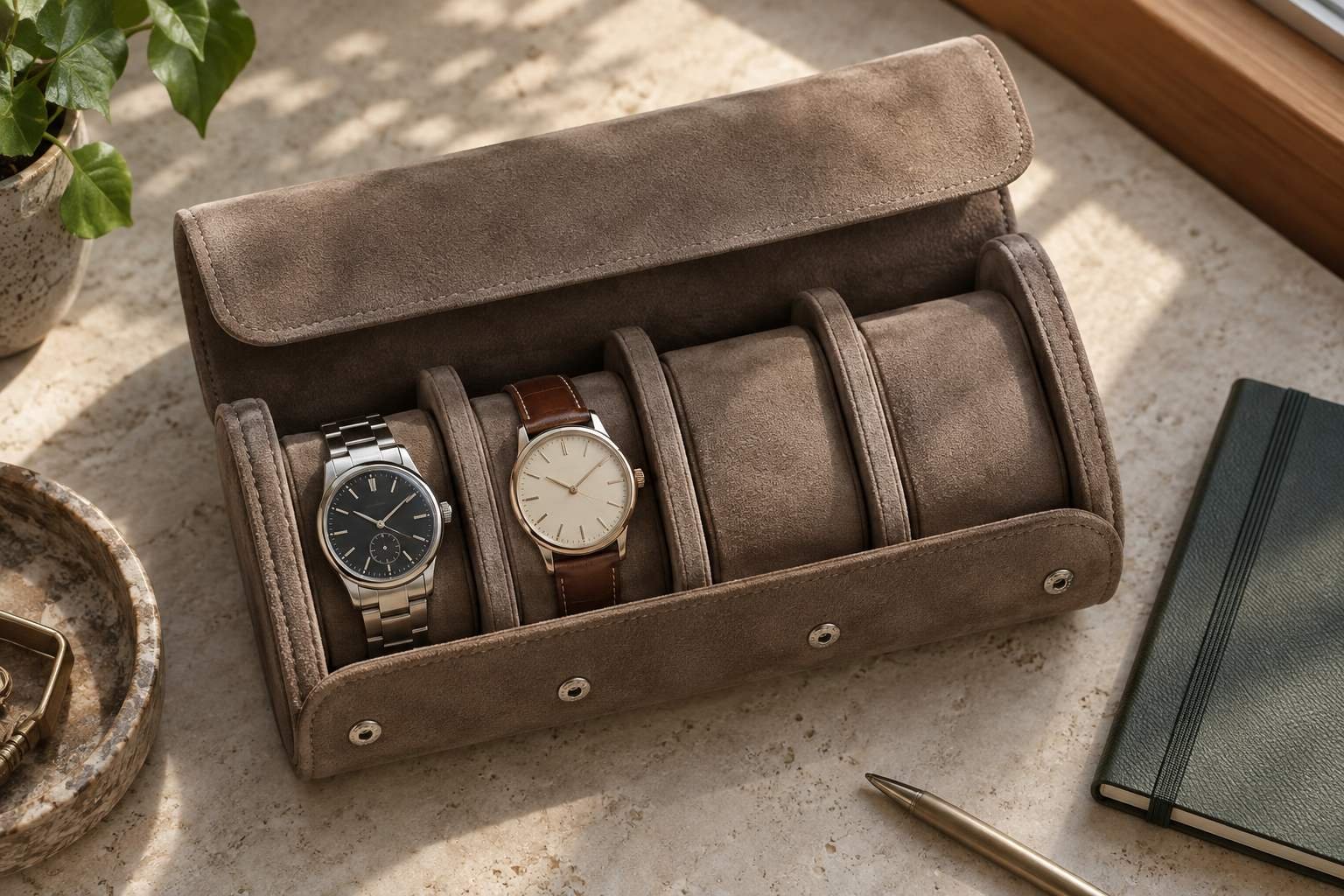
Set a physical or numerical limit and require a reason for overlap. Before buying, ask what the new watch enables that the current collection does not. Selling is not failure; it can clarify taste and return unused objects to circulation.
An enduring collection becomes a record of choices, not a race through releases. Wear each piece, learn its strengths and maintain it well. Restraint gives craft enough time to become personal.
Keep a collection ledger
Record reference and serial information, purchase date, seller, condition, bracelet links, service history and clear photographs. Store a copy away from the watches and protect sensitive details. The ledger supports insurance, maintenance and future sale, while also showing how the collection is actually used.
Once a year, review wrist time without guilt. A watch worn rarely may still have emotional or historical value, but a pattern of unused purchases can reveal that collecting has replaced wearing. Decide deliberately whether to retain, service, gift or sell. The goal is coherence, not constant turnover. If a watch is retained for sentiment, state that plainly rather than forcing it to satisfy an investment argument.
Develop a pre-purchase examination
Inspect the dial and hands in several kinds of light, operate the crown and clasp, and check every function without forcing it. Compare the watch with the maker’s current documentation where relevant. For a pre-owned piece, ask what has been replaced, refinished or serviced and whether the seller’s return period allows independent examination.
Accuracy observed for a few minutes in a shop is not a meaningful long-term test. Published standards and recent service evidence provide context, while actual performance depends on position, wear and condition. If precision is central to the purchase, agree on how it will be assessed and what remedy exists if the watch falls outside the seller’s representation.
Consider how the watch will be maintained locally. A rare movement or independent maker may provide exceptional craft but require specialist service, international shipping or long waits. That tradeoff can be entirely worthwhile when understood before purchase.
Separate market attention from personal value
Prices, availability and online attention change. A watch should remain satisfying if its resale value falls or another release attracts more discussion. Avoid financing a discretionary collection on the assumption that appreciation will cover the cost. Financial questions require qualified advice and current evidence beyond an editorial guide.
Limit exposure to launch cycles when they create urgency. Save photographs of candidates and revisit them after several weeks. Compare the proposed purchase with what is already owned, including dimensions and dial color, rather than comparing it only with other products in the same campaign.
A collecting thesis can be simple: watches from one design period, useful complications, independent craft or pieces connected to personal milestones. It should clarify choices without becoming a rule that forces purchases. Collections can evolve as knowledge and daily life change.
Wear and care with confidence
Follow maker guidance for water resistance, magnetism, winding and setting. Avoid changing date mechanisms during restricted hours when the manual warns against it. Keep bracelets clean and straps dry according to their material, and remove a watch for activities that exceed its intended use.
The end point is familiarity. A small collection becomes more rewarding when its owner knows how each watch wears, behaves and fits into life. Knowledge reduces anxiety about use while encouraging the maintenance that allows careful objects to endure.
Make the next decision slower
When another watch attracts attention, place its dimensions, function, service path and intended use beside the existing collection ledger. Identify what it adds and what would receive less wear. If the answer depends mainly on scarcity or online excitement, wait until the urgency fades.
A purchase that still makes sense after time, comparison and a realistic ownership budget is more likely to endure. The collection can remain unfinished indefinitely. That openness allows taste to develop and gives each object enough use to become associated with life rather than acquisition. Wear the candidate more than once when a trial is possible, because comfort and legibility can change between a brief fitting and an ordinary day.
Sources and further reading
Official and authoritative material used to support this guide. Access dates reflect editorial research.
- Precision and the Chronometer, Official Swiss Chronometer Testing Institute (COSC). Accessed October 12, 2026.