How to choose an itinerary, operator and pace that respect protected landscapes while creating a comfortable, rewarding voyage.
Let conservation define the trip
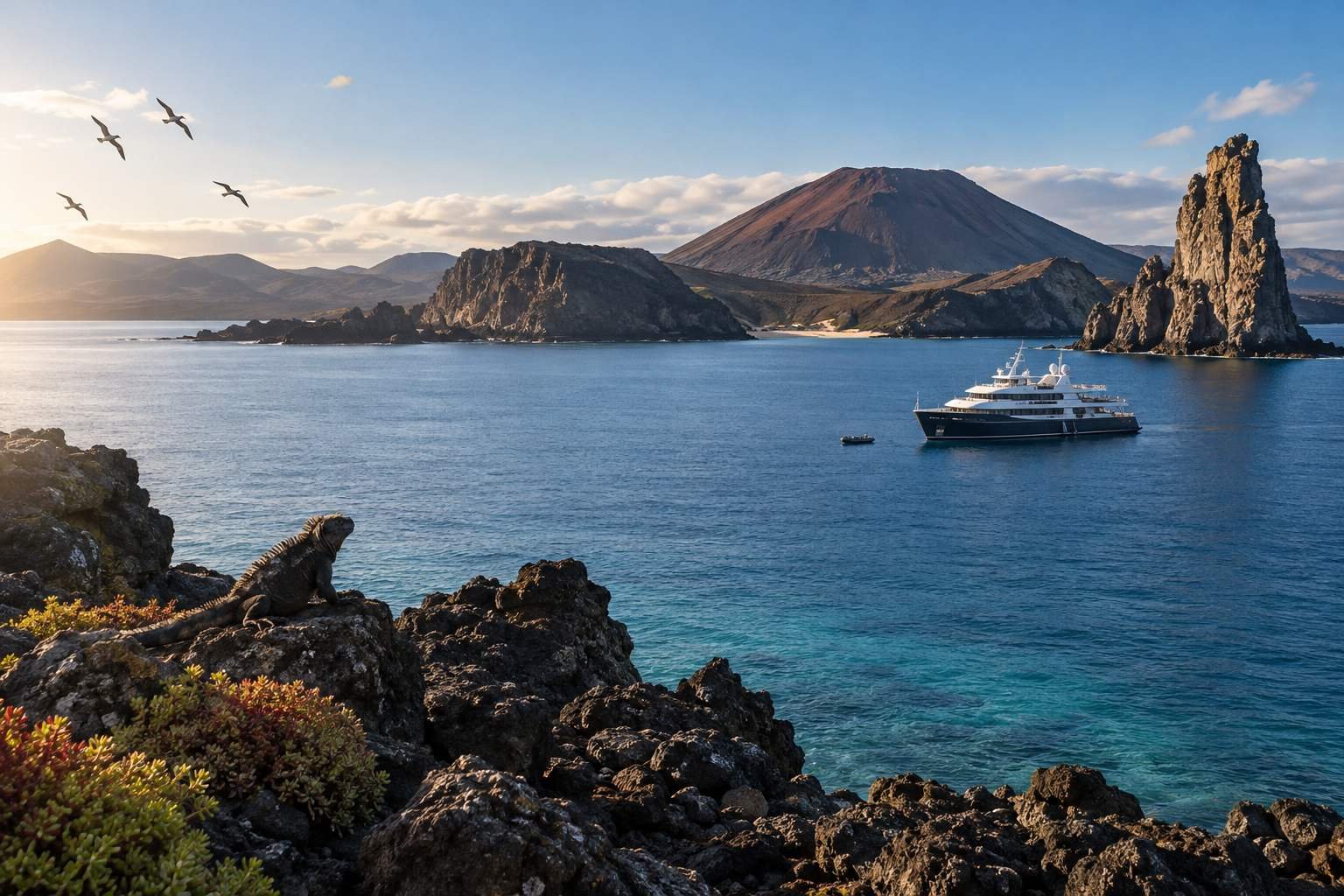
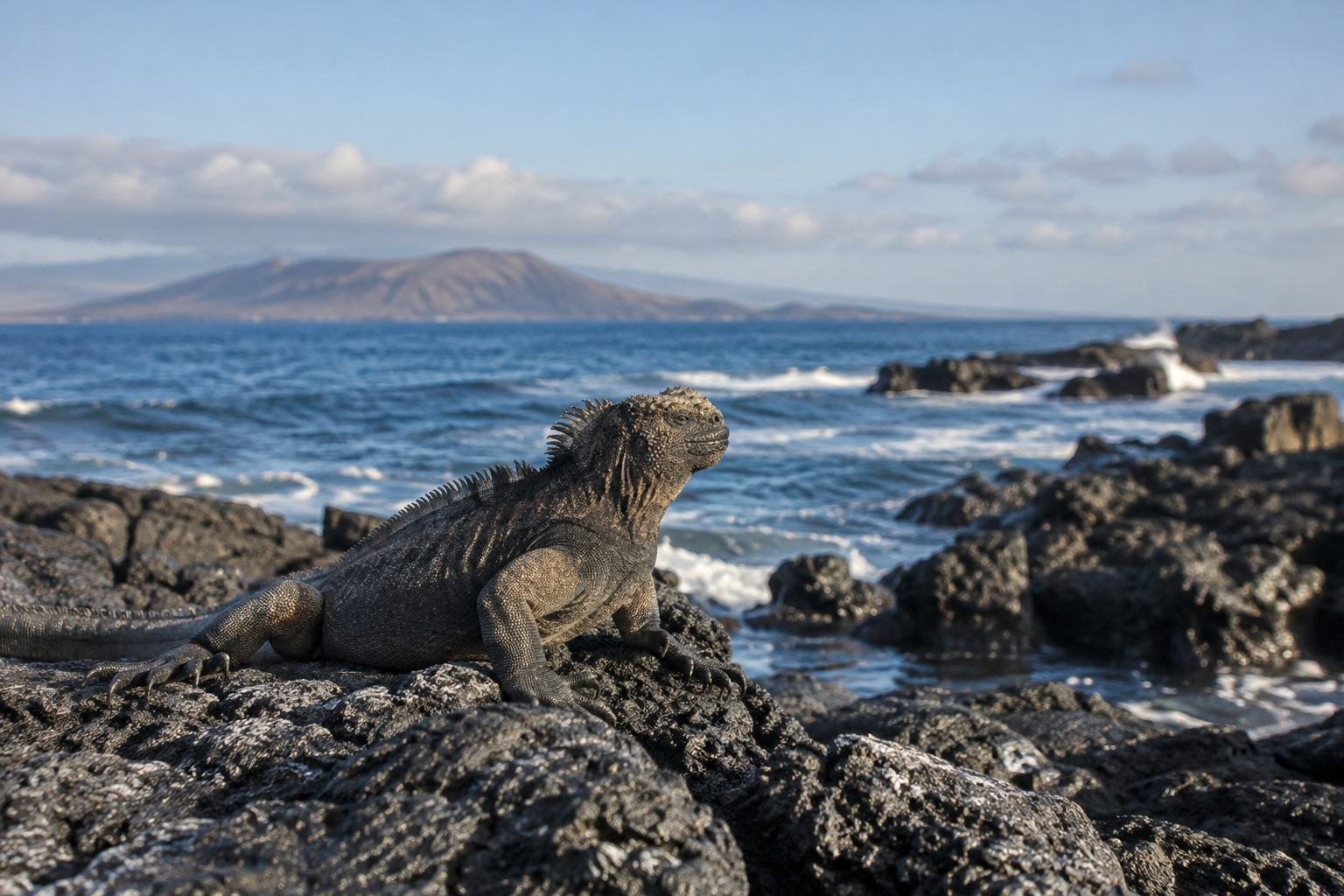
The Galápagos are protected living systems, not a backdrop for collecting close-up photographs. The National Park’s visitor rules set the tone: follow marked trails, keep the required distance from wildlife, do not touch or feed animals, and leave natural material where it belongs. A premium trip should make those responsibilities easier through good briefing, small-group organization and guides who explain behavior before a landing.
Ask an operator how it prepares guests, manages waste and works within authorized visitor sites. Clear answers are more useful than broad claims about sustainability. Responsible conduct can feel restrictive only when it is introduced late; when expectations are understood from the start, they create quieter encounters and protect the conditions that make the islands remarkable.
Choose between a vessel and a land base
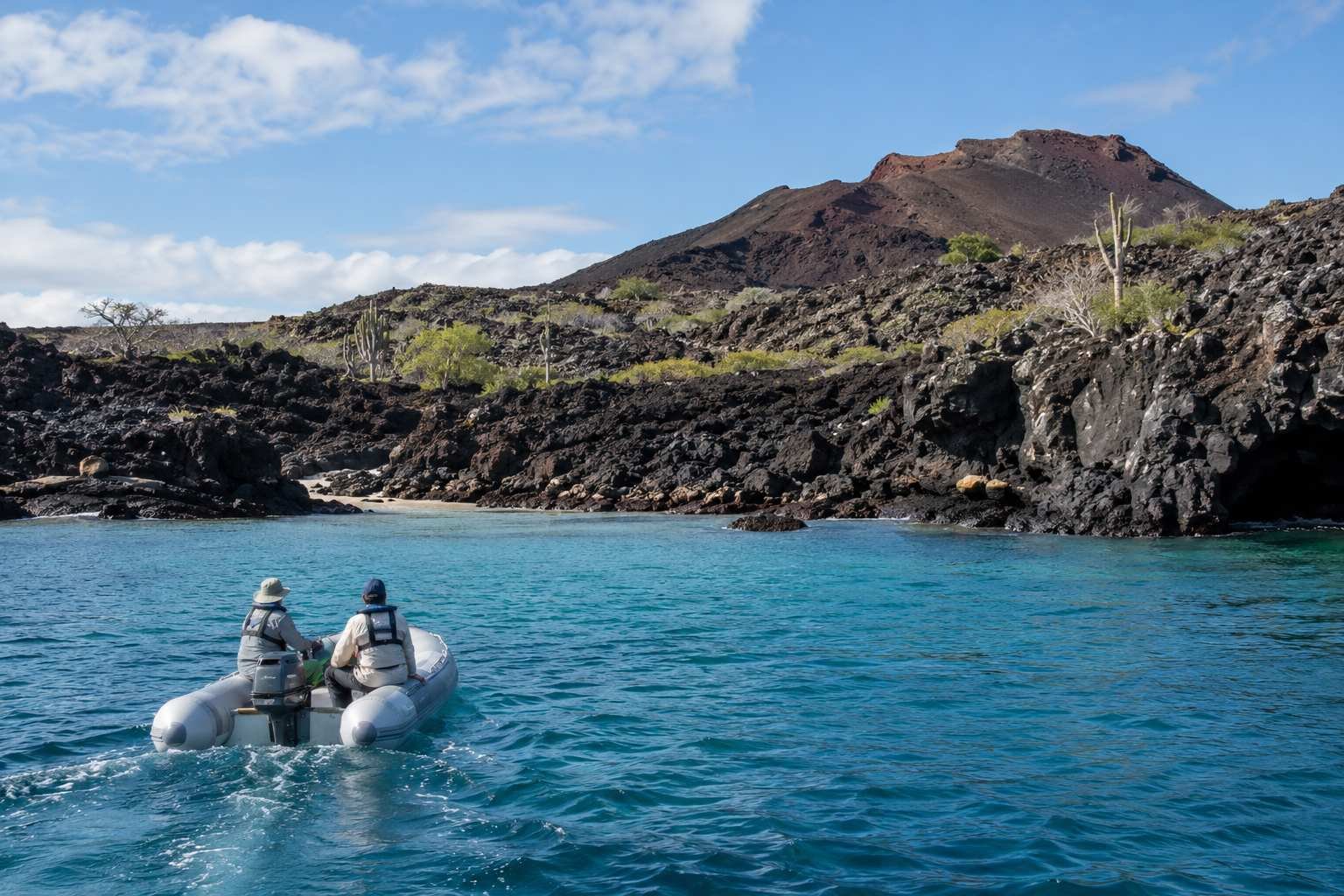
A small expedition vessel can reach several islands while guests sleep, reducing repeated airport and ferry logistics. It also creates a fixed daily rhythm of landings, snorkeling, meals and briefings. A land-based itinerary offers larger rooms, more choice in restaurants and freedom to slow down, but day boats may repeat longer passages. Neither format is inherently superior. The right choice depends on comfort at sea, mobility, desired sites and tolerance for a structured schedule.
Request the precise itinerary and note that weather, park controls and safety can change it. Compare the time actually spent ashore rather than the number of islands listed. On a vessel, ask about stabilizers, cabin position, engine noise, stairs, tender boarding and medical arrangements. On land, examine transfer lengths and whether excursions return early enough to enjoy the town without exhaustion.
Treat the guide as the central amenity
A strong naturalist guide helps guests see relationships rather than isolated species: how currents shape food supply, why vegetation changes between zones, and how introduced organisms affect native life. Ask about guide credentials, language fluency and typical group size. An elegant cabin cannot compensate for rushed interpretation or poor group management.
Good guiding also supports photography without letting cameras dominate. The guide can establish where to stand, how to avoid blocking a trail and when to put the lens down. Bring modest equipment that can be carried securely during wet landings. Long lenses may be less useful than expected because wildlife can be visible at regulated but relatively close distances.
Plan for sea, sun and wet landings
Conditions shift quickly between exposed decks, cool water, strong equatorial sun and air-conditioned interiors. Pack light layers, a brimmed hat, high-coverage sun protection, a refillable bottle and footwear specified by the operator. A dry bag protects essential electronics during tender rides. Reef-safe product claims vary, so focus first on physical coverage and follow current local and operator guidance.
Discuss motion sickness with an appropriate health professional before travel if it is a concern. Cabin location and voyage pattern can affect comfort, but no operator can promise calm water. Leave valuable jewelry and elaborate evening clothes at home. The prevailing formality is practical: clean, dry, comfortable and ready for the next briefing.
Build recovery into the schedule
Twice-daily excursions, snorkeling and early starts can be demanding. Choose a cabin and vessel for sleep quality, then permit yourself to skip an outing. Missing one landing can preserve enjoyment of the remaining week. Travelers with limited mobility should describe specific needs, including steps, balance and tender transfers, before booking; labels such as “accessible” are too general for an expedition.
A night in mainland Ecuador before the island flight provides a sensible buffer. A second night after the voyage can soften the transition home and protect against tightly linked tickets. Travel insurance should be reviewed for medical evacuation, interruption and the exact activities planned.
A better definition of luxury
In a protected archipelago, luxury is competent stewardship: a vessel that operates safely, a crew that communicates clearly, a guide with time for questions, equipment that fits and an itinerary that does not crowd each encounter. It is also the discipline to keep distance when an animal approaches and to accept a changed landing without demanding exceptions.
Choose the trip whose operations match its promises. Read the official visitor rules before departure, ask direct questions, and arrive prepared for simplicity. Comfort can support attention, but the lasting value comes from seeing a rare environment on its own terms.
Evaluate an operator beyond the brochure
Request the vessel’s legal name, recent specification, normal guest capacity and a sample daily program. Ask who operates the voyage and who is responsible for guest communication before departure. Clear ownership matters when weather changes, equipment is unavailable or a medical question arises. A polished sales company and the operating company may not be the same organization.
Compare guide-to-guest arrangements, tender capacity and the way snorkeling groups are supervised. Ask how equipment is fitted and whether guests may opt for a shorter or easier activity. The answer should describe a real process rather than promise that every excursion suits everyone. Travelers should disclose relevant mobility or health concerns to the appropriate professional and operator early enough for an informed decision.
Read cancellation and itinerary-change language carefully. Protected-area controls and marine conditions can alter landings, and wildlife cannot be scheduled. A responsible operator explains those limits without presenting every change as an equivalent experience. Travel insurance should match the route, activities and remoteness, with policy wording reviewed rather than assumed.
Plan photography without compromising the encounter
Choose equipment that can be carried safely through a wet landing and used without separating from the group. A weather-resistant bag, spare battery and simple cleaning cloth may be more valuable than several heavy lenses. Practice changing settings before the trip so attention remains on footing, guide instructions and animal behavior.
Keep the regulated distance even when another visitor appears closer. Wildlife may move toward a trail, and the guide will explain how the group should respond. Do not reposition vegetation, call to an animal or block its route for a photograph. The strongest image is never worth changing the conditions of the encounter.
Back up photographs when practical, then set aside periods with no camera. A notebook can capture the guide’s explanation, site name and questions to research later. This record often gives photographs more meaning than an uninterrupted sequence of files with little context.
Prepare for the return home
Clean footwear, bags and outdoor equipment according to current biosecurity guidance before and during the journey. Never carry shells, rocks, feathers, seeds or other natural material away from a visitor site. If a souvenir’s origin is uncertain, leave it. The rules protect both the islands and the places travelers visit next.
After the voyage, resist turning wildlife proximity into a claim that access was exclusive or unrestricted. Share the distance rules and the role of guides when describing the experience. Responsible storytelling helps future visitors arrive with realistic expectations and reinforces the conduct on which protected access depends.
Sources and further reading
Official and authoritative material used to support this guide. Access dates reflect editorial research.
- Visitor Rules in Galápagos Protected Areas, Galápagos National Park Directorate. Accessed October 12, 2026.
- Basic Safety Guidance for Oceanic Voyages by Non-Regulated Craft, International Maritime Organization. Accessed October 12, 2026.