A calm, practical approach to combining Japan’s high-speed rail network with beautiful stays, thoughtful luggage planning and time to experience each place.
Begin with the rhythm, not the map
Japan’s rail network makes ambitious itineraries look deceptively easy. A better luxury is to resist using every available connection. Choose two or three regions that express different sides of the country, then give each enough time to become more than a station name. Tokyo, Kyoto and a quieter rural stop can form a complete journey; adding more cities may produce more transfers than memories. Build around the experiences that matter most, such as gardens in the early morning, a long dinner, an art island or several unhurried nights at a ryokan. The train should connect those moments cleanly rather than become the purpose of the schedule.
Count hotel changes as work. Even with excellent rail service, packing, checking out, finding a platform and settling into another room consume attention. Three nights is a useful minimum in a major city, while a one-night rural stay makes sense only when arrival and departure times leave a meaningful afternoon and morning. Keep one flexible half-day after a long international flight and another near the end of the trip.
Choose trains and seats with intention
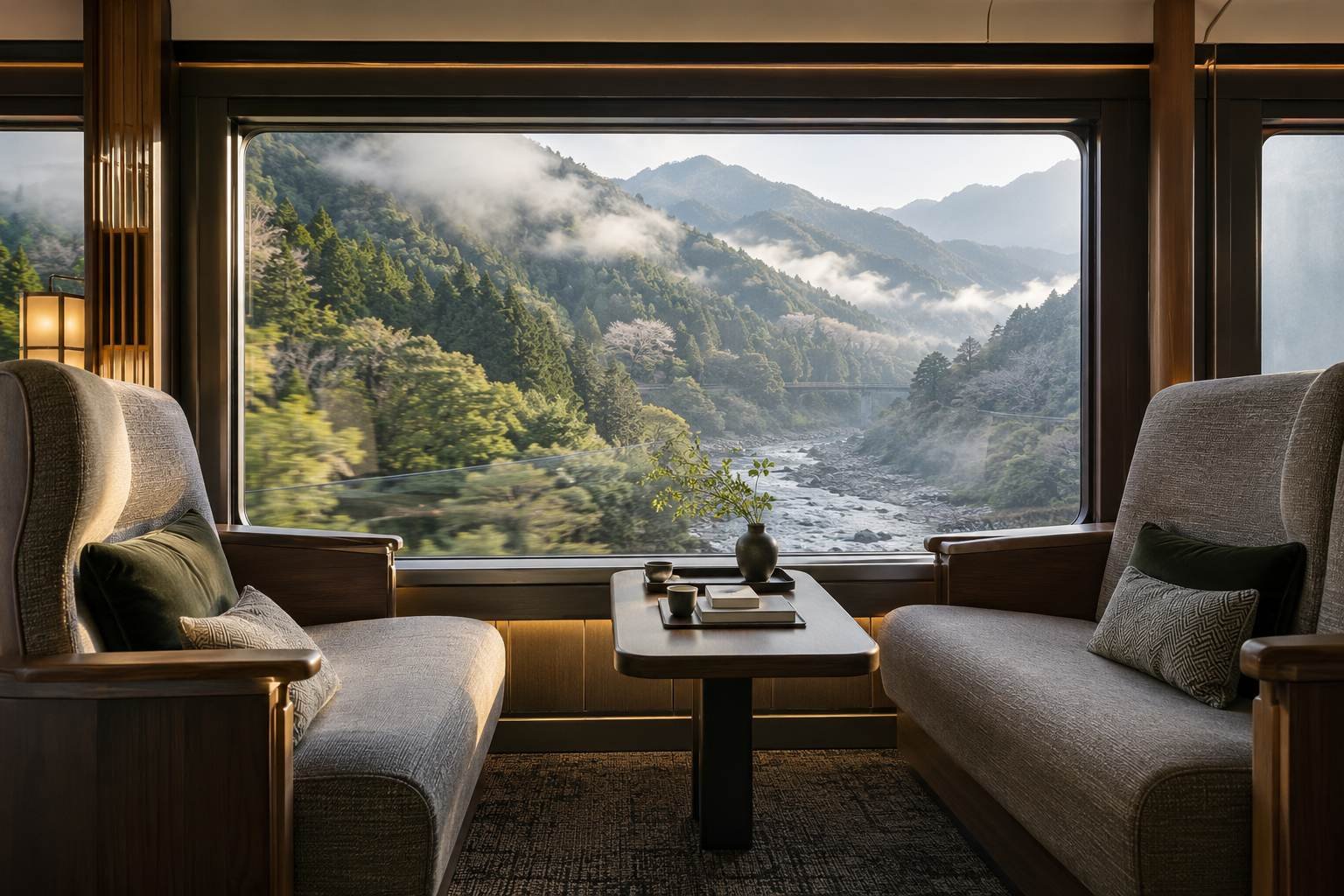
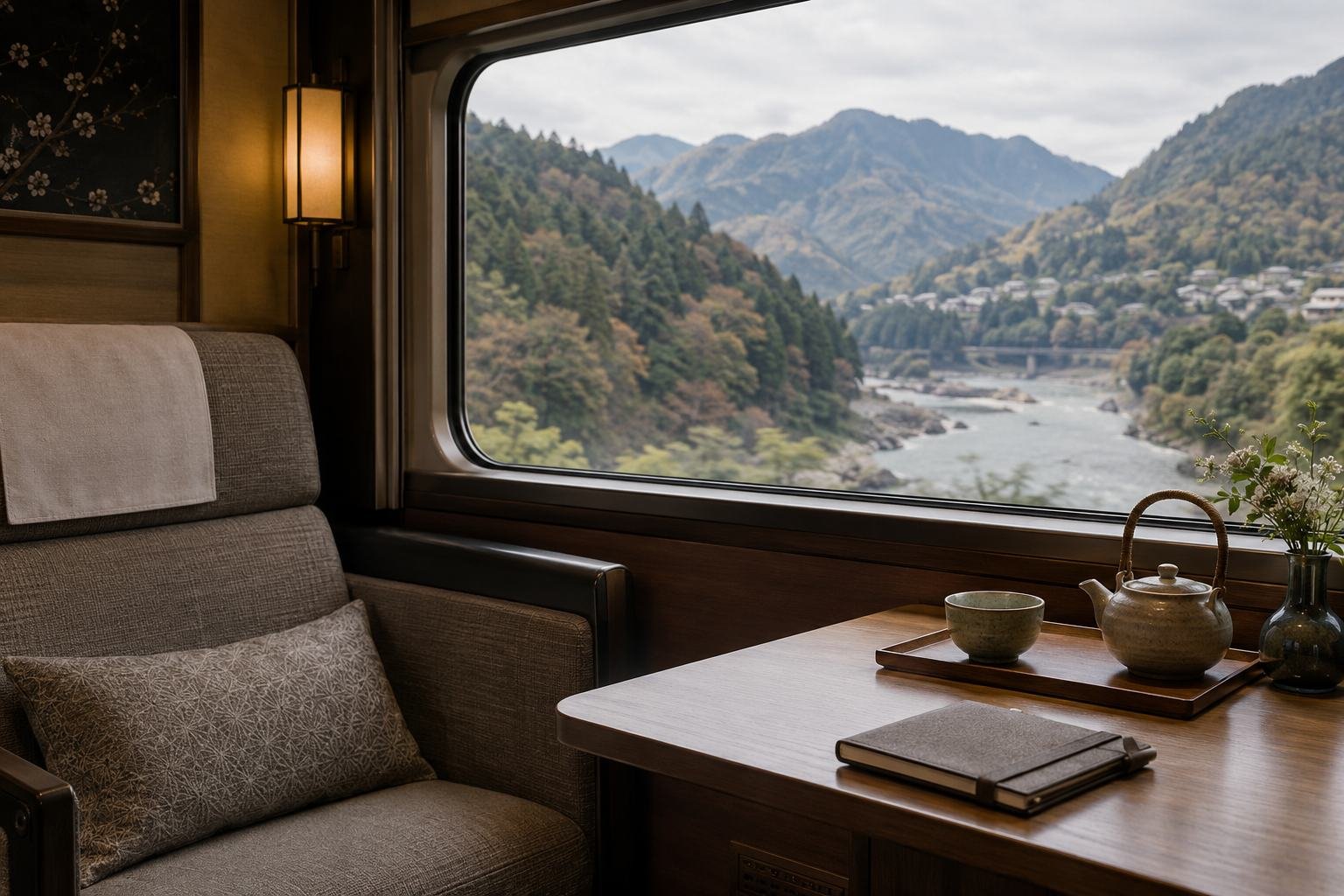
The Shinkansen links the main metropolitan corridor at high frequency, while limited express and local services reach mountain, coastal and regional destinations. Start with the official timetable and the exact stations serving each stay. “Tokyo” may mean a choice among several large terminals, and a hotel near the correct one can remove a difficult transfer. Reserved seating is worthwhile on a carefully timed journey, during holiday periods and whenever adjacent seats matter. Green Car and, on selected services, GranClass provide more space, but the quieter carriage environment and simple boarding process often matter as much as the seat itself.
Treat the fastest train as one option rather than an automatic choice. A slightly slower service may offer a direct connection, a better departure time or a landscape worth seeing. Keep confirmation details available offline, arrive with enough time to identify the platform, and follow carriage markings. Stations are orderly, yet major hubs can be extensive. Ten minutes that looks generous on a timetable may feel tight when lifts, luggage and unfamiliar signage are involved.
Design a humane luggage strategy
A compact case changes the trip. Japanese stations are navigable with luggage, but escalators, busy platforms and smaller regional trains reward restraint. Pack by segment: keep two or three days of essentials in a cabin-size bag and send larger luggage ahead when a hotel-supported delivery service fits the itinerary. Confirm delivery lead times and whether the next property accepts forwarded items before relying on this system. Never assume a rural inn has the same arrangements as an international hotel.
For oversized baggage on certain Shinkansen routes, review the current reservation requirements with the rail operator when booking. Measure the bag rather than estimating it. If a transfer includes a local bus, ferry or traditional property with stairs, ask about storage and access in advance. A refined journey is one in which belongings support movement rather than dictate it.
Pair city hotels with place-specific stays
Use accommodation to vary the journey. A well-connected city hotel works for museums, dining and early trains. A ryokan or small regional inn offers a different rhythm built around bathing, meals and the immediate landscape. Read the property’s own guidance on check-in, dining times, footwear, bathing etiquette and dietary requests. These are operational details, not decorative customs, and late arrival can disrupt a carefully prepared meal.
Judge a room by how it will be used. A station view may be less valuable than a calm neighborhood, convenient laundry and a good breakfast before departure. In a rural stay, a private bath can offer ease, while a public onsen may be central to the experience. Ask specific questions about accessibility, tattoos, children and bathing arrangements rather than relying on broad category labels.
Leave room for weather and curiosity
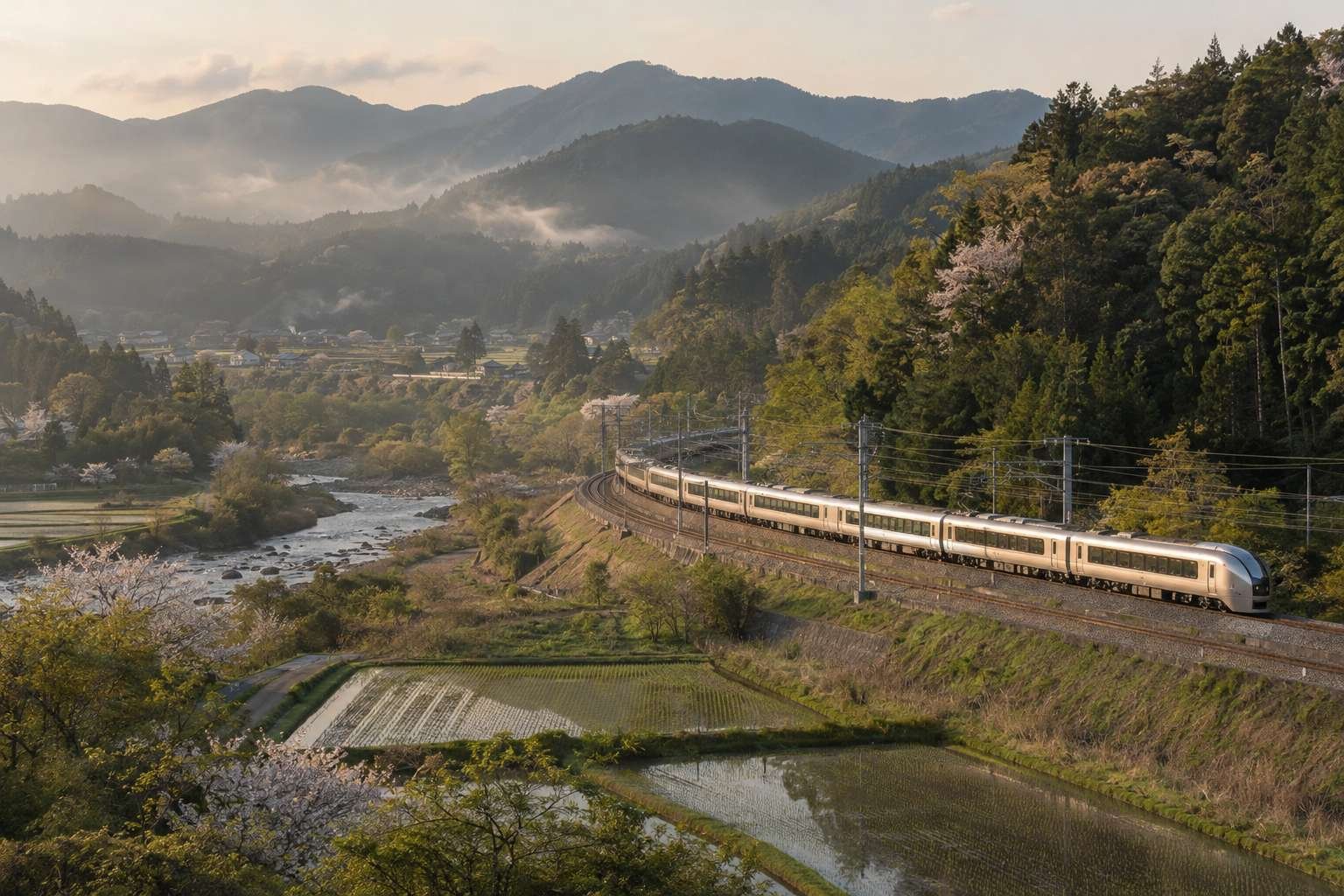
Rail reliability does not eliminate weather, fatigue or seasonal crowds. Avoid placing an irreplaceable reservation immediately after a long cross-country transfer. A buffer turns disruption into a change of plan rather than a crisis. It also creates room for small discoveries: a neighborhood coffee counter, a local craft shop or a garden that deserves another hour.
Spring blossom and autumn color can be beautiful and busy. Winter changes mountain access, while summer heat affects how much walking feels pleasant. Use official regional information close to departure and keep one alternative for each weather-dependent day. The goal is not to defeat uncertainty but to give it somewhere to go.
A concise planning checklist
Confirm the route station by station; reserve seats where timing or adjacency matters; verify luggage rules; keep tickets and confirmations offline; choose hotels for the actual terminal used; allow realistic transfers; confirm ryokan meal and arrival policies; carry a payment backup; and protect at least one unscheduled half-day. These small decisions create the sense of ease often associated with luxury.
The most successful Japanese rail itinerary feels spacious even when it crosses great distance. It uses the network’s precision to protect time for landscape, food, craft and conversation. The result is not a race through famous stops, but a sequence of places connected with clarity.
Build the itinerary in layers
Start with a simple route diagram that shows nights, stations and the reason for each stop. Then add fixed commitments such as a timed museum entry or a ryokan dinner. Only after those anchors are secure should you select individual trains. This order prevents a timetable from dictating the entire holiday and makes it easier to see when two consecutive travel days are creating unnecessary friction.
For each transfer, write down the departure station, arrival station, train type, reserved carriage, platform information when available and the route from the station to the hotel. Include a realistic walking or taxi allowance. A ten-minute rail connection and a ten-minute walk are different planning problems, particularly with luggage, rain or a large station between them.
Review the plan as a complete day rather than a sequence of punctual trains. Lunch, check-in windows and the energy needed for an evening reservation belong on the same page. If the schedule requires every service to run perfectly, remove a commitment or choose an earlier departure. Reliability should create confidence, not encourage a brittle itinerary.
Make regional travel feel distinct
Use each base to change the character of the journey. A city segment might prioritize architecture and dining, while a mountain or coastal segment can slow the pace and bring the landscape forward. This contrast is more memorable than repeating a similar luxury hotel in several cities. It can also guide practical choices such as footwear, baggage forwarding and the value of a private transfer for the final rural leg.
Research local transport beyond the intercity train. Buses and smaller railways may run less often, accept different tickets or stop operating earlier in the evening. Check official regional information close to travel and keep the property’s contact details available. When the last connection is important, ask the hotel to confirm the current route rather than relying on an old itinerary found elsewhere.
A final review should answer three questions: what is fixed, what can move and what can be dropped without regret? Mark those distinctions clearly. The resulting plan still benefits from Japan’s precise network, but it leaves enough room for a delayed lunch, changing weather or a place that deserves a longer look.
Sources and further reading
Official and authoritative material used to support this guide. Access dates reflect editorial research.
- Traveling by Rail, Japan National Tourism Organization. Accessed October 12, 2026.
- Shinkansen (Bullet Train), Japan National Tourism Organization. Accessed October 12, 2026.