
A clear framework for deciding when private aviation is suitable, comparing options and preparing a safe, efficient journey.
Begin with the actual problem
Private aviation can reduce surface transfers, connect airports without scheduled service and accommodate a group with complex timing. It also carries high financial and environmental costs. Define the reason before requesting aircraft: avoiding an overnight connection, reaching a remote region, moving specialist equipment or keeping a team together.
Compare the complete journey with scheduled premium cabins, rail and ground transport. Include travel to each terminal, security procedures, connection risk and flexibility. The responsible choice may be a scheduled long-haul flight followed by a short charter rather than flying privately across the entire route.
Understand how access is sold
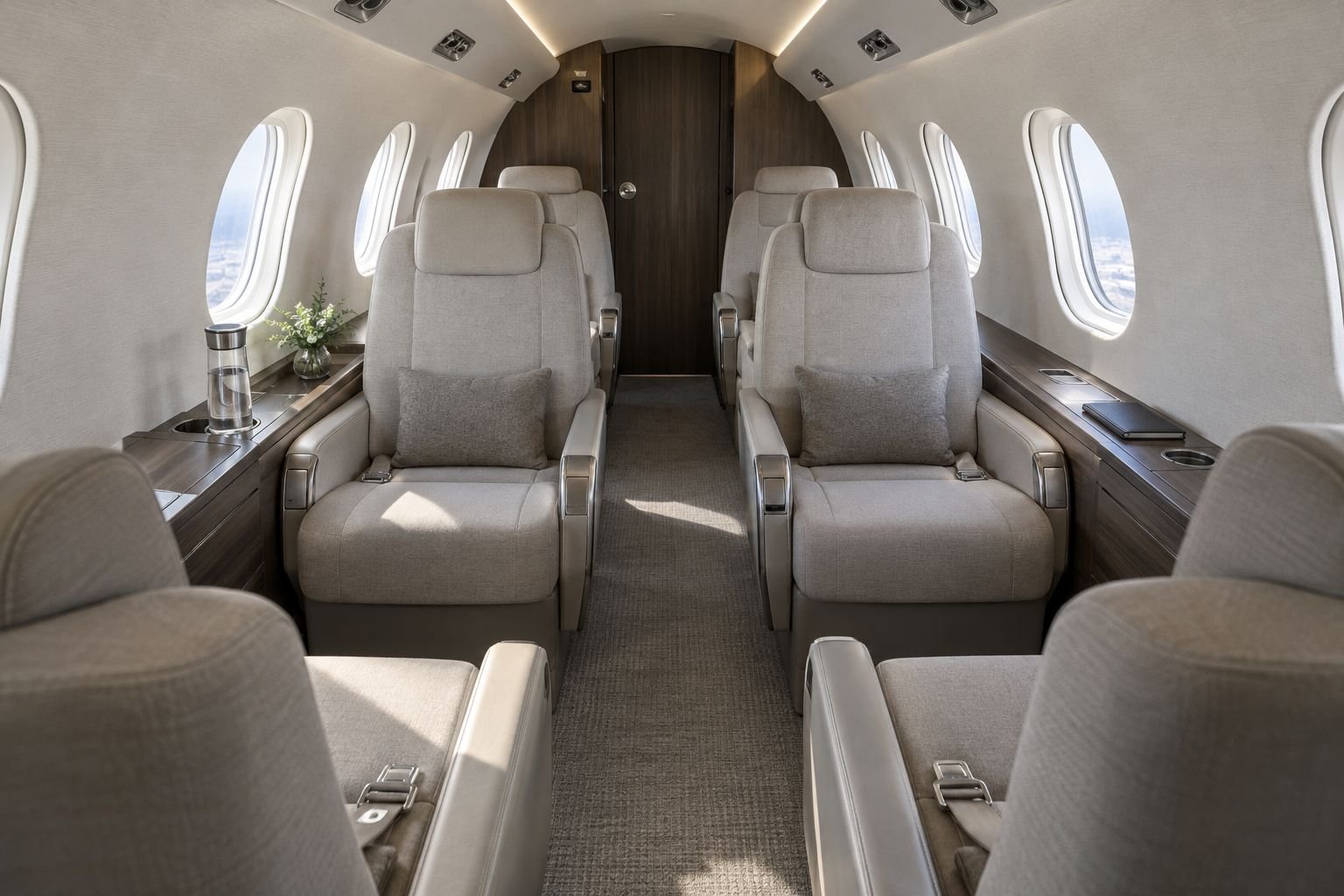
Options include on-demand charter, membership programs, jet cards and fractional ownership. Each allocates availability, pricing and commitment differently. For occasional trips, a transparent charter quote may be easier to evaluate; frequent and predictable travel may justify another model.
Ask who holds the operating certificate, who has operational control and which company will appear on the contract. A broker arranges travel but may not operate the aircraft. Verify credentials through the relevant aviation authority and treat unusually low prices or last-minute banking changes as warning signs.
Match the aircraft to the mission
Passenger count alone does not determine suitability. Runway length, weather, range with reserves, baggage volume, cabin height and lavatory arrangements all matter. A larger cabin may require a fuel stop where a different aircraft could fly directly, while a small aircraft may be uncomfortable for a long sector.
Provide exact baggage dimensions, pets, mobility needs and special equipment. The operator and crew determine what can be carried safely. Do not pressure them to exceed limits or promise a type before operational review.
Plan terminals and ground transfers
Private terminals can shorten formalities, but procedures vary by airport and international route. Confirm identification, customs, arrival time and vehicle access. A remote airport that appears closer on a map may have limited ground transport or operating hours.
Coordinate the final transfer as carefully as the flight. Share realistic passenger and luggage details, keep the driver informed through the operator, and build a weather buffer around events that cannot move.

Accept operational uncertainty
Flight planning is governed by weather, air traffic, aircraft condition and regulatory requirements. The FAA explains formal flight-plan processes for controlled operations, but passengers mainly need to understand that the crew cannot guarantee a route or departure against safety.
Ask how the provider handles maintenance substitutions, delays and crew duty limits. A responsible operator may say no. The contract should explain alternatives and financial treatment without encouraging unsafe pressure.
Reduce avoidable impact
Combine passengers, choose the smallest suitable aircraft, avoid empty repositioning when a credible shared option exists and use private aviation for sectors where its value is clear. Environmental programs should be evaluated by their published methodology rather than used as permission to ignore direct emissions.
Responsible planning is not about presenting private flying as ordinary. It means using it selectively, choosing qualified operators and treating safety limits as final. Convenience is meaningful only when the journey is appropriate and competently run.
Compare quotations on the same basis
A useful comparison identifies the operator, aircraft type, year and configuration where supplied, passenger capacity for the mission, luggage limits, included ground time, taxes, de-icing treatment, cancellation terms and likely repositioning. A single headline amount can hide material differences. Ask for clarification in writing and keep the final operational contact separate from sales correspondence.
Before travel, confirm passenger names exactly as required, identification, terminal address, arrival time and restrictions on food, liquids or specialist equipment. Reconfirm close to departure because tail numbers and crews can change for legitimate operational reasons. Verify any payment change by calling a known number rather than replying to the message that requested it. Keep the journey brief with the group, including the possibility of diversion, so operational changes do not become a surprise at the terminal.
Ask safety questions clearly
A passenger is entitled to know the legal operator and the regulatory framework under which the flight will occur. Ask how the operator selects crews, maintains the aircraft and handles a substitution. The answer may reference formal systems and authorities; it should not rely solely on a salesperson’s assurance that a fleet is “premium.”
Confirm that the quoted aircraft is suitable for the exact airports, passenger load and luggage. The final operational decision belongs to the operator and crew, and conditions can require a different aircraft, fuel stop or departure time. Contract terms should explain how a material change is handled.
Travelers with reduced mobility, medical equipment or oxygen requirements need early, specific discussion. Cabin doors, stairs and aisle dimensions vary substantially. General statements about accessibility are insufficient when boarding and safe stowage depend on the aircraft.
Coordinate an international journey
Private terminals do not remove passport, customs, immigration or agricultural requirements. Ask which documents must be provided in advance and when passengers must arrive. Pets, food, valuable goods and specialist equipment can trigger additional rules that differ by destination.
Build time for permits and airport operating restrictions into the request. A desired departure may not be available simply because the aircraft and passengers are ready. The operator should manage formal flight requirements, while passengers remain responsible for accurate personal and travel documentation.
If the trip connects with a scheduled flight, treat baggage rules and terminal transfers as separate systems. Private aircraft capacity does not guarantee that the onward airline accepts the same items. Keep a buffer for customs and surface transport between airports or terminals.
Record the decision
Keep the final quotation, operator identity, aircraft confirmation, passenger details and payment evidence together. Note why private aviation was selected over the alternatives and whether the trip met that need. This creates a rational basis for future decisions instead of allowing convenience to become automatic.
The most responsible private journey is one with a defined purpose, qualified operation and realistic alternatives considered. Selectivity protects safety, cost and environmental judgment while preserving the service for circumstances in which it offers clear value.
Use a repeatable go-or-no-go test
For each request, compare total journey time, group needs, scheduled alternatives, surface access, cost, operational complexity and environmental impact. Record which factor makes private aviation proportionate for that trip. A repeatable test helps prevent a special solution from becoming the default through habit.
If the case remains weak, use the strongest scheduled or ground alternative without treating it as a lesser experience. If the case is clear, proceed with verified operators and realistic conditions. Responsible use depends on the quality of that decision before an aircraft is selected. Revisit the decision after travel and record delays, surface time and actual group needs; the evidence may point to a different mode or aircraft category next time.
Sources and further reading
Official and authoritative material used to support this guide. Access dates reflect editorial research.
- Flight Plan Filing, Federal Aviation Administration. Accessed October 12, 2026.